Abstract
Hypothyroidism is a common endocrine disorder in women of reproductive age and is associated with a wide range of adverse pregnancy outcomes. Thyroid hormones play a critical role in maternal metabolism and fetal neurodevelopment, particularly during early gestation when the fetus is entirely dependent on maternal thyroxine. This narrative review aims to synthesize current evidence regarding the impact of maternal hypothyroidism on pregnancy outcomes, focusing on both maternal and fetal risks, as well as diagnostic and therapeutic approaches. Relevant literature was identified through a structured search of major electronic databases, including Web of Science, Scopus, and the Cochrane Library. Maternal hypothyroidism, both overt and subclinical, has been associated with adverse outcomes such as miscarriage, preeclampsia, gestational hypertension, anemia, and postpartum hemorrhage. Fetal and neonatal complications include preterm birth, low birth weight, intrauterine growth restriction, congenital hypothyroidism, and long-term neurocognitive impairment. Early diagnosis remains challenging due to nonspecific symptoms, emphasizing the importance of biochemical screening using thyroid-stimulating hormone (TSH) and free thyroxine (fT4). Levothyroxine remains the gold standard for treatment, with dose adjustments required throughout pregnancy to maintain trimester-specific TSH targets. Emerging evidence highlights the importance of screening high-risk populations and suggests potential benefits of broader screening strategies. In conclusion, hypothyroidism during pregnancy represents a significant but manageable risk factor for adverse outcomes. Early identification, appropriate treatment, and close monitoring are essential to improving maternal and neonatal health. Further research is needed to optimize screening strategies and management protocols.
Keywords
Hypothyroidism in pregnancy; Subclinical hypothyroidism; Thyroid dysfunction; Pregnancy outcomes; Levothyroxine; Fetal neurodevelopment; Thyroid screening
Introduction
Hypothyroidism is a common endocrine disorder characterized by insufficient production of thyroid hormones, which are essential for metabolic regulation and normal physiological function. During pregnancy, thyroid hormones play a pivotal role not only in maintaining maternal homeostasis but also in ensuring proper fetal development, particularly of the central nervous system (Alexander et al., 2017). The prevalence of overt hypothyroidism in pregnancy is estimated at 0.3-0.5%, while subclinical hypothyroidism affects approximately 2-3% of pregnant women (Casey & Leveno, 2006). In iodine-sufficient regions, the most common cause is autoimmune thyroid disease, particularly Hashimoto’s thyroiditis, whereas iodine deficiency remains a leading cause globally [13]. Pregnancy induces significant physiological changes that increase thyroid hormone requirements. Elevated levels of estrogen lead to increased thyroid-binding globulin, while placental deiodinases alter thyroid hormone metabolism. Additionally, human chorionic gonadotropin (hCG) exerts a thyrotropic effect, particularly in early pregnancy, influencing thyroid function tests (Lazarus et al., 2019). These changes necessitate careful interpretation of thyroid function during pregnancy using trimester-specific reference ranges. Maternal hypothyroidism has been associated with a wide spectrum of adverse outcomes. For the mother, these include miscarriage, gestational hypertension, preeclampsia, anemia, and postpartum hemorrhage [10]. For the fetus, insufficient maternal thyroid hormone levels especially during the first trimester can impair neurodevelopment, resulting in cognitive deficits and lower IQ scores (Korevaar et al., 2016). Recent evidence from case-control studies suggests that thyroid dysfunction is associated with recurrent pregnancy loss. Maternal hypothyroidism has been associated with miscarriage and recurrent pregnancy loss, particularly in the context of autoimmune thyroid disease [8]. Despite the well-documented risks, the optimal strategy for screening and management remains controversial. While targeted screening of high-risk women is recommended by several organizations, there is increasing evidence supporting universal screening due to the high prevalence of undiagnosed subclinical hypothyroidism [12]. Maternal hypothyroidism is associated with a broad spectrum of adverse pregnancy outcomes. The risk of miscarriage is increased by approximately 1.8-2.5-fold, particularly in women with thyroid autoimmunity. In addition, overt hypothyroidism is linked to a 2-3-fold higher risk of preeclampsia, while both overt and subclinical forms are associated with a 1.5-2-fold increased risk of preterm birth. Fetal consequences include a 1.3-1.8-fold increased risk of intrauterine growth restriction and low birth weight. Importantly, untreated maternal hypothyroidism during early gestation has been associated with a reduction of approximately 7-10 IQ points in offspring, underscoring the critical role of thyroid hormones in early neurodevelopment ([11]; Korevaar et al., 2016). This narrative review aims to synthesize and critically evaluate current evidence on hypothyroidism in pregnancy, focusing on pathophysiology, maternal and fetal outcomes, diagnostic strategies, and current management approaches.
Study Design and Methods
This narrative review was designed to synthesize and critically evaluate current evidence regarding hypothyroidism in pregnancy, with a focus on maternal and fetal outcomes, diagnostic approaches, and management strategies. A structured review of the literature was performed using major electronic databases, including Web of Science, Scopus, and the Cochrane Library. These databases were selected to ensure comprehensive coverage of peer-reviewed biomedical literature. The search strategy incorporated a combination of keywords and relevant medical subject headings (MeSH), including “hypothyroidism in pregnancy,” “subclinical hypothyroidism pregnancy,” “thyroid dysfunction maternal outcomes,” and “fetal neurodevelopment thyroid.”
Additional relevant articles were identified through manual screening of reference lists of selected studies. Studies were considered eligible if they met the following inclusion criteria: publication in English; study designs including clinical trials, systematic reviews, meta-analyses, and clinical guidelines; and a primary focus on maternal, fetal, or neonatal outcomes associated with thyroid dysfunction in pregnancy. Exclusion criteria included case reports, conference abstracts, non-peer-reviewed articles, and studies lacking clearly defined methodology or clinical relevance. Data from eligible studies were extracted and categorized into key domains, including maternal outcomes, fetal and neonatal outcomes, diagnostic strategies, and treatment approaches. The findings were then synthesized qualitatively to provide a comprehensive and clinically relevant overview of the current evidence.
Maternal and Fetal Outcomes
Maternal hypothyroidism is associated with a broad spectrum of adverse pregnancy outcomes, mediated by impaired placental function, disrupted maternal metabolic homeostasis, and insufficient thyroid hormone availability during critical periods of fetal development, particularly in early gestation. These associations have been consistently demonstrated across observational studies and meta-analyses, underscoring the clinical importance of early diagnosis and appropriate management. The clinical impact of maternal hypothyroidism encompasses both maternal and fetal complications, reflecting the central role of thyroid hormones in regulating placental function, vascular integrity, and fetal neurodevelopment. Maternal complications are primarily related to endothelial dysfunction, altered hemodynamics, and impaired uterine contractility, whereas fetal and neonatal outcomes are largely driven by placental insufficiency and inadequate thyroid hormone supply during early neurodevelopment. These findings are consistent with previously reported quantitative increases in the risks of miscarriage, preeclampsia, preterm birth, and impaired fetal neurodevelopment. The range of reported complications, along with their underlying pathophysiological mechanisms, is summarized in Table 1.
| Category | Complications | Pathophysiological Mechanism |
| Maternal | Miscarriage | Impaired implantation, altered endometrial receptivity |
| Preeclampsia | Endothelial dysfunction, placental insufficiency | |
| Gestational hypertension | Increased vascular resistance | |
| Anemia | Reduced erythropoiesis, impaired iron metabolism | |
| Postpartum hemorrhage | Uterine atony due to metabolic dysfunction | |
| Preterm labor | Hormonal imbalance, placental dysfunction | |
| Placental abruption | Vascular instability, impaired placentation | |
| Postpartum thyroiditis | Autoimmune rebound after delivery | |
| Fetal / Neonatal | Intrauterine growth restriction (IUGR) | Placental insufficiency, reduced nutrient transfer |
| Low birth weight | Impaired fetal metabolism | |
| Preterm birth | Secondary to maternal complications | |
| Congenital hypothyroidism | Inadequate thyroid hormone availability | |
| Neurocognitive impairment | Deficient maternal T4 in early gestation | |
| Lower IQ | Impaired neuronal migration and myelination | |
| Fetal distress | Hypoxia due to placental dysfunction | |
| Stillbirth | Severe placental insufficiency |
As illustrated in Table 1, hypothyroidism contributes to both maternal and fetal morbidity through multiple interconnected mechanisms. Maternal complications are largely related to endothelial dysfunction and impaired uterine contractility, whereas fetal complications are primarily driven by placental insufficiency and inadequate thyroid hormone supply during early neurodevelopment. These findings underscore the importance of early diagnosis and appropriate management. Accurate diagnosis of hypothyroidism during pregnancy requires careful interpretation of thyroid function tests in the context of pregnancy-specific physiological changes. The classification of thyroid dysfunction is based on serum TSH, free thyroxine (fT4), and thyroid autoantibody status. The diagnostic criteria and clinical classification are summarized in Table 2.
| Condition | TSH Level | Free T4 (fT4) | Thyroid Antibodies (TPO-Ab) | Clinical Significance |
| Normal thyroid function | Within trimester-specific range | Normal | Negative or positive | No treatment required |
| Overt hypothyroidism | >10 mIU/L OR elevated above trimester range | Low | May be positive | High risk-requires immediate treatment |
| Subclinical hypothyroidism (SCH) | Elevated above trimester range (≈2.5-10 mIU/L) | Normal | ± Positive | Moderate risk - treatment depends on TPO-Ab and TSH level |
| Isolated hypothyroxinemia | Normal | Low | Usually negative | Unclear significance - monitoring recommended |
| Euthyroid with positive antibodies | Normal | Normal | Positive | Increased risk of miscarriage and postpartum thyroiditis |
| Central hypothyroidism (rare) | Normal or low | Low | Negative | Requires specialist evaluation |
Table 2 highlights the heterogeneity of thyroid dysfunction in pregnancy, ranging from overt hypothyroidism to subclinical and isolated biochemical abnormalities. This classification is clinically relevant, as it directly influences treatment decisions and risk stratification. In particular, the presence of thyroid autoantibodies further modifies clinical risk and management strategies. In addition to classification, accurate interpretation of thyroid function requires consideration of pregnancy-specific physiological changes. Trimester-specific reference ranges for TSH are therefore essential for correct diagnosis and clinical decision-making, as presented in Table 3.
| Trimester | TSH Reference Range |
| 1st trimester | 0.1-2.5 mIU/L |
| 2nd trimester | 0.2-3.0 mIU/L |
| 3rd trimester | 0.3-3.0 mIU/L |
The application of trimester-specific TSH reference ranges is essential for accurate diagnosis and avoidance of both under- and over-treatment. Failure to apply these adjusted thresholds may lead to misclassification of thyroid status, particularly in early pregnancy, when maternal thyroid hormone availability is critical for fetal neurodevelopment. Management of hypothyroidism in pregnancy is guided by evidence-based recommendations from major professional organizations, particularly the American Thyroid Association (ATA) and the American College of Obstetricians and Gynecologists (ACOG). Although broadly aligned, these guidelines differ in certain clinical scenarios. A comparison of treatment thresholds is presented in Table 4.
| Clinical Scenario | ATA (2017 Guidelines) | ACOG Recommendations | Clinical Interpretation |
| TSH >10 mIU/L | Treat with levothyroxine | Treat with levothyroxine | Strong consensus - overt hypothyroidism |
| TSH above trimester range + low fT4 | Treat | Treat | Overt hypothyroidism - mandatory treatment |
| TSH 4.0-10 mIU/L (normal fT4) | Treat | Consider treatment | Stronger support in ATA |
| TSH 2.5-4.0 + TPO-Ab (+) | Consider treatment | No clear recommendation | ATA more proactive |
| TSH 2.5-4.0 + TPO-Ab (-) | Individualized decision | Usually no treatment | Conservative approach |
| Normal TSH + TPO-Ab (+) | No routine treatment | No treatment | Monitor closely |
| Isolated hypothyroxinemia | No routine treatment | No treatment | Insufficient evidence |
As shown in Table 4, both ATA and ACOG strongly recommend treatment in cases of overt hypothyroidism, while differences emerge in the management of subclinical disease. The ATA adopts a more proactive approach, particularly in antibody-positive women, whereas ACOG tends to recommend a more individualized strategy. These differences highlight ongoing uncertainty and the need for clinical judgment in borderline cases. Building on these diagnostic principles, appropriate management strategies are essential to optimize maternal and fetal outcomes.
Management Strategies
A structured clinical approach to the management of hypothyroidism in pregnancy is summarized in Figure 1. Overt hypothyroidism requires immediate initiation of levothyroxine therapy, whereas the management of subclinical hypothyroidism should be individualized based on TSH levels and thyroid peroxidase antibody status. Dose adjustments are frequently necessary throughout pregnancy due to increased physiological demands, and regular monitoring of TSH and free thyroxine is essential to ensure adequate treatment. Particular attention should be given to maintaining trimester-specific TSH targets, as even transient maternal hypothyroxinemia may adversely affect fetal neurodevelopment.
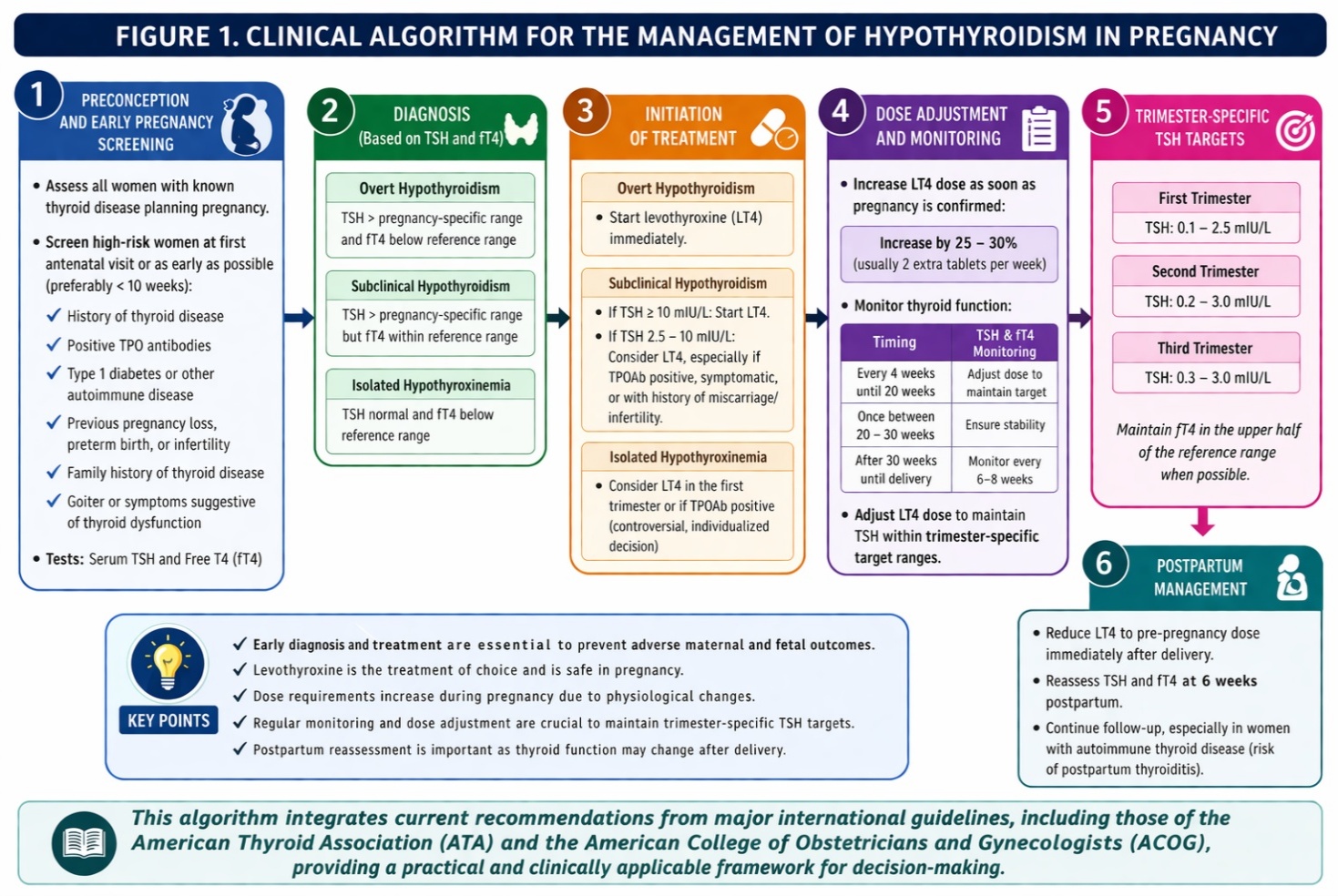
The algorithm also highlights the importance of postpartum reassessment, as thyroid function often changes following delivery, particularly in women with autoimmune thyroid disease. Overall, a structured and proactive approach to management is critical to optimizing both maternal and neonatal outcomes. This algorithm integrates current recommendations from major international guidelines, including those of the American Thyroid Association (ATA) and the American College of Obstetricians and Gynecologists (ACOG), and provides a structured, clinically applicable framework for evidence-based decision-making.
1. Preconception Management
Preconception care is critical in women with known hypothyroidism:
TSH should be optimized to <2.5 mIU/L prior to conception (Alexander et al., 2017)
Levothyroxine dose adjustments may be required before pregnancy
Screening is recommended in women with: Infertility, Recurrent pregnancy loss and Autoimmune diseases
Early optimization reduces the risk of first-trimester complications and supports normal embryogenesis.
2. Levothyroxine Therapy
First-Line Treatment
Levothyroxine (LT4) is the treatment of choice
Safe, effective, and does not cross the placenta in harmful amounts
Dose Adjustments
Increase dose by ~30-50% immediately after pregnancy confirmation
Common practical approach: Add 2 extra doses per week
Treatment Targets
Maintain TSH within trimester-specific ranges: 1st trimester: <2.5 mIU/L and 2nd/3rd trimester: <3.0 mIU/L
3. Monitoring During Pregnancy
TSH and fT4 should be monitored on every 4 weeks in the first half of pregnancy, at least once per trimester thereafter
Dose adjustments should be made promptly to avoid maternal hypothyroxinemia
4. Management of Subclinical Hypothyroidism
Treatment decisions should be individualized:
| Clinical Scenario | Recommendation |
| TSH >4.0 mIU/L | Treat with LT4 |
| TSH 2.5-4.0 + TPO-Ab (+) | Consider treatment |
| TSH 2.5-4.0 + TPO-Ab (-) | Monitor or treat (case-based) |
Evidence suggests greatest benefit in TPO-Ab positive women and those with higher TSH levels [11].
5. Iodine Supplementation
Recommended daily intake: 250 µg/day (WHO)
Sources: iodized salt, prenatal vitamins
Avoid excessive iodine (>500-1100 µg/day), which may impair thyroid function
6. Drug Interactions and Absorption
Levothyroxine absorption can be reduced by, Iron supplements, Calcium carbonate and Proton pump inhibitors
Recommendation:
Take LT4 on an empty stomach
Separate from supplements by ≥4 hours
7. Postpartum Management
Reassess TSH 6-8 weeks postpartum
Return to pre-pregnancy LT4 dose in most cases
Monitor for postpartum thyroiditis, especially in TPO-Ab positive women
8. Special Clinical Situations
Autoimmune Thyroid Disease
Increased monitoring required
Higher risk of miscarriage and postpartum dysfunction
Infertility and Assisted Reproduction
TSH should be strictly controlled (<2.5 mIU/L)
LT4 improves implantation and pregnancy outcomes
Future Directions and Clinical Implications
Despite substantial progress in understanding hypothyroidism during pregnancy, several important areas remain unresolved and warrant further investigation. One of the key challenges is the optimal management of subclinical hypothyroidism, particularly in women who are negative for thyroid peroxidase antibodies. While some studies suggest potential benefits of levothyroxine therapy, the evidence remains inconsistent, highlighting the need for well-designed randomized controlled trials to clarify treatment indications and outcomes. Another important area of ongoing debate is the role of universal screening. Although current guidelines primarily recommend targeted screening of high-risk populations, emerging evidence suggests that this approach may fail to identify a significant proportion of affected women. Future research should focus on evaluating the cost-effectiveness and clinical impact of universal screening strategies in diverse populations. In addition, the role of thyroid autoimmunity in pregnancy outcomes requires further clarification. The management of euthyroid women with positive thyroid antibodies remains controversial, and additional studies are needed to determine whether intervention can improve maternal and fetal outcomes in this subgroup. Finally, greater attention should be given to iodine nutrition during pregnancy, particularly in regions with mild iodine deficiency. Public health strategies aimed at optimizing iodine intake may play a crucial role in improving thyroid function and reducing adverse pregnancy outcomes.
From a clinical perspective, the integration of evidence-based guidelines into routine practice, along with individualized patient management, remains essential. Future advances in this field will likely depend on improved risk stratification, earlier diagnosis, and more targeted therapeutic approaches.
Limitations and Strengths
This study has several limitations that should be considered when interpreting the findings. First, the narrative design of the review, although appropriate for providing a broad overview, lacks the methodological rigor of a systematic review and may be associated with an increased risk of selection bias. Second, the inclusion of studies with heterogeneous designs, populations, and diagnostic criteria may limit the comparability of results and contribute to variability in reported outcomes. Despite these limitations, the present review also has notable strengths. It provides a comprehensive synthesis of current evidence on hypothyroidism in pregnancy, integrating findings from multiple high-quality sources, including clinical trials, meta-analyses, and international guidelines. In addition, the use of major biomedical databases, such as Web of Science, Scopus, and the Cochrane Library, enhances the breadth and relevance of the included literature. The integration of clinical guidelines with recent evidence further strengthens the practical applicability of the findings.
Discussion
The relationship between maternal hypothyroidism and adverse pregnancy outcomes is well established; however, several areas remain controversial and continue to evolve. One of the most debated aspects is the clinical significance of subclinical hypothyroidism (SCH). While overt hypothyroidism is consistently associated with increased risks of miscarriage, preeclampsia, and neurodevelopmental impairment, the evidence for SCH is more heterogeneous. Some meta-analyses demonstrate increased risks of pregnancy loss and preterm birth, particularly in women with positive thyroid peroxidase antibodies (TPO-Ab), whereas others report minimal or no significant associations ([11]; Korevaar et al., 2016). A critical factor influencing outcomes is timing of thyroid dysfunction. Thyroid hormones are essential during the first trimester, when fetal neurodevelopment depends entirely on maternal thyroxine. Even transient maternal hypothyroxinemia during this period may result in long-term cognitive deficits in offspring (Haddow et al., 1999). This underscores the importance of preconception optimization of thyroid function, particularly in women with known thyroid disease or infertility. Another key issue is the screening strategy. Current guidelines predominantly recommend targeted screening of high-risk women; however, this approach may fail to identify up to 30–55% of pregnant women with thyroid dysfunction [12]. Proponents of universal screening argue that the relatively low cost of TSH testing and the potential to prevent adverse outcomes justify broader implementation. Conversely, critics highlight the risks of overdiagnosis and overtreatment, particularly in cases of mild TSH elevation without clear clinical significance. The role of thyroid autoimmunity further complicates the clinical landscape. Women who are euthyroid but TPO-Ab positive have been shown to have an increased risk of miscarriage and preterm delivery. While some studies suggest that levothyroxine treatment may reduce these risks, others do not demonstrate clear benefit, leading to ongoing debate regarding management in this subgroup (Alexander et al., 2017). Additionally, iodine status remains a global determinant of thyroid health in pregnancy. Even in developed countries, mild iodine deficiency has been reported and may contribute to suboptimal thyroid function and impaired neurodevelopmental outcomes [13]. Overall, the current body of evidence supports the importance of early identification and individualized management, but highlights significant gaps in knowledge, particularly regarding subclinical disease, antibody-positive euthyroid women, and optimal screening strategies. Recent evidence from a retrospective case-control study further supports the association between thyroid dysfunction and recurrent pregnancy loss, highlighting the importance of thyroid screening in women with adverse reproductive history [8]. Current guidelines predominantly recommend targeted screening of high-risk women; however, this approach may fail to identify up to 30–55% of pregnant women with thyroid dysfunction [12], including data from Bulgaria highlighting population-specific variability in thyroid function during pregnancy (Borissova et al., 2020).
Conclusion
Hypothyroidism in pregnancy remains a clinically significant condition with important implications for both maternal and fetal health. Early diagnosis, appropriate treatment with levothyroxine, and regular monitoring are essential to reduce the risk of adverse outcomes. Future research should focus on refining screening strategies, particularly the role of universal screening, and optimizing treatment protocols to further improve maternal and neonatal outcomes.
Summary
Hypothyroidism during pregnancy is a common endocrine disorder with significant implications for both maternal and fetal health. Thyroid hormones are essential for metabolic regulation and play a critical role in fetal neurodevelopment, particularly during the first trimester when the fetus is entirely dependent on maternal thyroxine. Both overt and subclinical hypothyroidism have been associated with adverse pregnancy outcomes. Maternal complications include miscarriage, preeclampsia, gestational hypertension, anemia, postpartum hemorrhage, and preterm delivery. Fetal and neonatal risks include intrauterine growth restriction, low birth weight, congenital hypothyroidism, and long-term neurocognitive impairment. Diagnosis relies primarily on measurement of thyroid-stimulating hormone (TSH) and free thyroxine (fT4), interpreted using trimester-specific reference ranges. The presence of thyroid autoantibodies, particularly thyroid peroxidase antibodies, further increases the risk of adverse outcomes and may influence management decisions. Levothyroxine remains the treatment of choice and is both safe and effective during pregnancy. Early initiation of therapy, appropriate dose adjustment, and regular monitoring of thyroid function are essential to maintain euthyroidism and reduce complications. While there is strong consensus regarding the treatment of overt hypothyroidism, the management of subclinical hypothyroidism remains an area of ongoing debate, particularly in antibody-negative women. Current evidence supports targeted screening of high-risk populations, although increasing data suggest that universal screening may improve detection rates.
In conclusion, hypothyroidism in pregnancy is a clinically significant but manageable condition. Early diagnosis, individualized treatment, and adherence to evidence-based guidelines are key to optimizing maternal and fetal outcomes. Further research is needed to refine screening strategies and clarify management in borderline and subclinical cases.
References
- Alexander EK, Pearce EN, Brent GA, Brown RS, Chen H, Dosiou C, et al. 2017. Guidelines of the American Thyroid Association for the diagnosis and management of thyroid disease during pregnancy and the postpartum. Thyroid. 2017;27(3):315–389. doi: DOI: 10.1089/thy.2016.0457
- American College of Obstetricians and Gynecologists. Thyroid disease in pregnancy. ACOG Practice Bulletin No. 223. Obstet Gynecol. 2020;135(6): e261–e274. doi: DOI: 10.1097/AOG.0000000000003893
- Borissova AM, Trifonova B, Dakovska L, Michaylova E, Vukov M. Factors determining thyroid status in pregnant women in Bulgaria. Int J Diabetes Endocrinol. 2020;5(4):89–95. doi: DOI: 10.11648/j.ijde.20200504.17
- Casey BM, Leveno KJ.Thyroid disease in pregnancy. Obstet Gynecol. 2006;108(5):1283–1292. doi: DOI: 10.1097/01.AOG.0000244103.91597.c5
- Glinoer D. The regulation of thyroid function during normal pregnancy. Endocr Rev. 1997;18(3):404–433. doi: DOI: 10.1210/edrv.18.3.0300
- Haddow JE, Palomaki GE, Allan WC, Williams JR, Knight GJ, Gagnon J, et al. Maternal thyroid deficiency during pregnancy and subsequent neuropsychological development of the child. N Engl J Med. 1999;341(8):549–555. doi: DOI: 10.1056/NEJM199908193410801
- Korevaar TIM, Medici M, Visser TJ, Peeters RP.Thyroid disease in pregnancy: new insights in diagnosis and clinical management. Lancet Diabetes Endocrinol. 2016;4(5):308–318. doi: DOI: 10.1016/S2213-8587(15)00391-9
- Kirovakov Z, Obreykova M, Kostadinov N, Jovanoska-Kirovakova A. Thyroid dysfunction and recurrent pregnancy loss: a retrospective case-control study. Int J Med Sci Clin Invent. 2026;13(3):7852–7856. doi: DOI: 10.18535/ijmsci/v13i.03.01
- Lazarus JH, Bestwick JP, Channon S, Paradice R, Maina A, Rees R, et al. Antenatal thyroid screening and childhood cognitive function. Lancet Diabetes Endocrinol. 2019;7(7):545–555. doi: DOI: 10.1016/S2213-8587(19)30148-3
- Mao J, Pop VJ, Bath SC, Vader HL, Redman CW, Rayman MP. Effect of thyroid hormone therapy on pregnancy outcomes in women with subclinical hypothyroidism. Clin Endocrinol (Oxf). 2020;92(2):129–138. doi: DOI: 10.1111/cen.14106
- Negro R, Schwartz A, Gismondi R, Tinelli A, Mangieri T, Stagnaro-Green A. Universal screening versus case finding for detection and treatment of thyroid dysfunction during pregnancy. J Clin Endocrinol Metab. 2010;95(4):1699–1707. doi: DOI: 10.1210/jc.2009-2009
- Stagnaro-Green A, Abalovich M, Alexander E, Azizi F, Mestman J, Negro R, et al. Guidelines of the American Thyroid Association for the diagnosis and management of thyroid disease during pregnancy and postpartum. Thyroid. 2011;21(10):1081–1125. doi: DOI: 10.1089/thy.2011.0087
- Velasco I, Taylor P. Identifying and treating subclinical thyroid dysfunction in pregnancy: emerging controversies. Best Pract Res Clin Endocrinol Metab. 2019;33(2):101–107. doi: DOI: 10.1016/j.beem.2019.101293